

OTS Member Highlight – Dr. Rebecca Miles
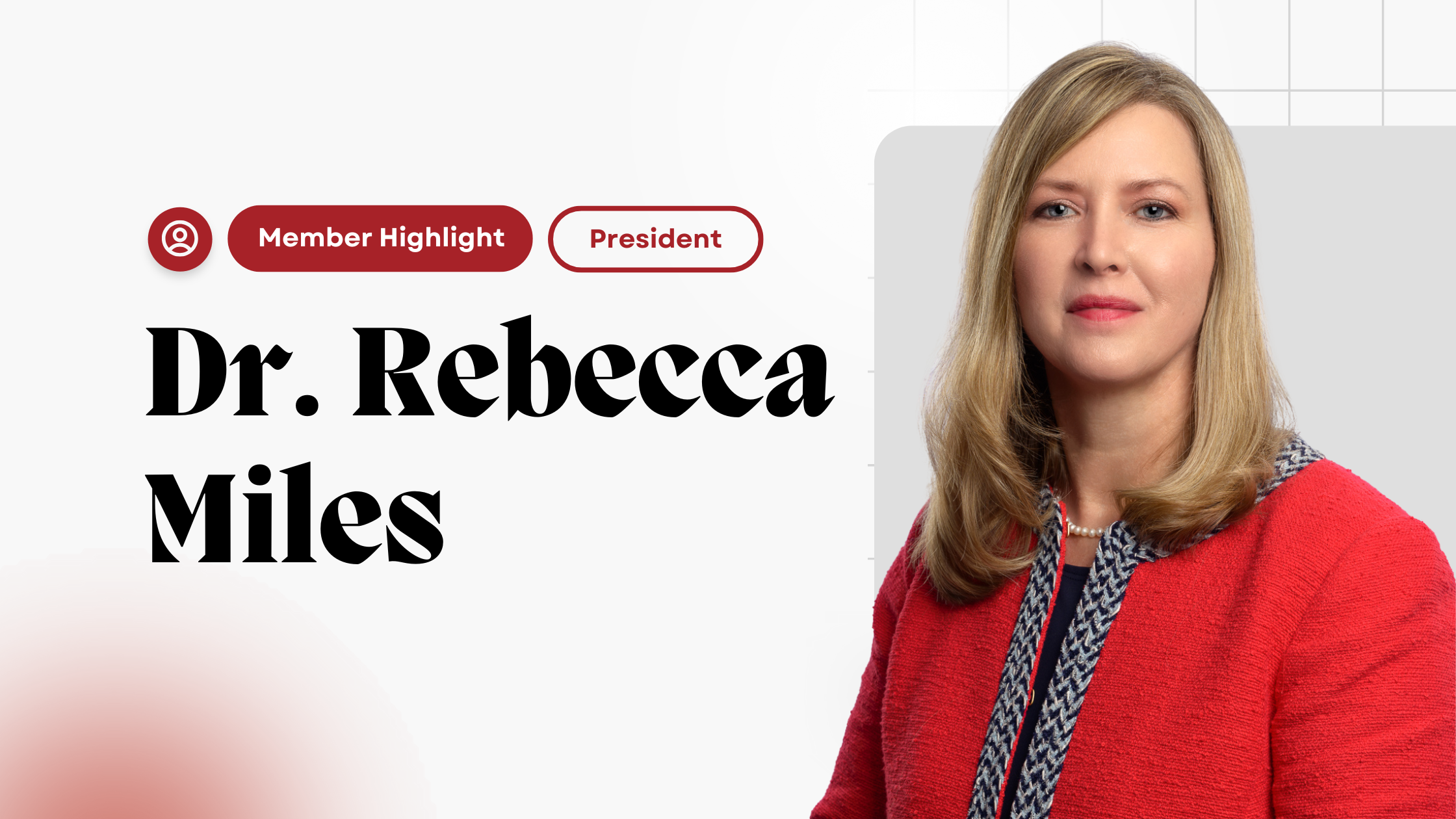
The incoming OTS President, Dr. Rebecca Miles, has always been curious about the way things work, and in high school, a human anatomy and physiology class sparked her passion for researching human diseases. As the first person in her family to pursue higher education, she was initially unsure which career would be the best path for understanding the human body and disease pathology. Now, with a successful 30-year career in biotechnology and pharmaceutical research, during which she worked her way from bench scientist to industry leader, she’s inspired to help others in the industry find their path.
Education and finding her passion for drug discovery
After earning her Bachelor of Science, she was offered the opportunity to serve as a research assistant in the laboratory of Geoff Greene. Here, as she conducted breast cancer research, she discovered her passion for basic discovery research, which then propelled her to pursue her Master’s in biology and later earn her PhD in biochemistry and molecular biology, during which her thesis focused on the integrated stress response and the role of GCN2 in wound healing. She says the role that stress plays in disease is immense, and non-healing wounds are a massive and costly health crisis.
“My PhD thesis was the first study that showed GCN2 plays a role in the re-epithelialization of wounds,” she says. “I hope that more work is done to further elucidate the molecular mechanisms of non-healing wounds that will bring new medicines to patients.”
After realizing her love of research could be geared toward drug discoveries that would help sick people get well, she knew that path was her calling.
Becoming a “drug hunter” at Eli Lilly and Company
In 1994, Rebecca began what would be a twenty-five year career at Eli Lilly and Company, starting by working on Raloxifene, a selective estrogen receptor modulator (SERM) for osteoporosis prevention. A few years in, she was excited to learn about emerging ASOs and the early Lilly partnership with IONIS. However, the chemistry was still in its early stages, and despite Lilly taking several ASOs to the clinic for cancer, the company was unable to achieve the desired results and exited from the oligonucleotide space until much later.
Rebecca credits the completion of the Human Genome Project (HGP) and the discovery of RNA interference (RNAi) as the key events influencing her trajectory toward genetic medicine. Rebecca was an early adopter of RNAi as a screening platform to help functionalize genes identified through the HGP, and she spent several years in the 2000s in a functional genomics group focused on target identification and validation of genes involved in disease mechanisms. RNAi screening was used to find genes that could be antagonized with small molecules or antibodies.
“In 2025, functionalizing genes may not seem like a big deal, but before we had all the technology and an imperfect map of the human genome, it was like a vast new world had opened for exploration with the completion of the HGP,” she explains, adding that when small molecules and antibodies were the primary source of therapeutics, the druggable genome was confined.
“You can imagine the excitement for a drug hunter like me to be able to think about being able to drug the entire genome with emerging modalities like RNAi/ASO/oligonucleotides,” she says.
Much of Rebecca’s expertise has been in the preclinical development of therapeutic siRNAs, specifically, in vitro and in vivo screening and validation, and she holds several patents in the RNAi space. Her decades at Eli Lilly included leadership roles and scientific oversight of projects in areas such as diabetes, cardiovascular disease, kidney disease, immunology, and neurodegeneration.
“Looking back at my career milestones, I am really proud of the molecules I have worked on that have made it to the clinic,” she says. So much work goes into that process – often, you play a small part in the overall effort, but it is a huge mountain to climb to get a molecule safely into humans.”
Reading papers and discovering the Oligonucleotide Therapeutics Society
After years of leveraging RNAi as a screening tool, Rebecca remained curious and eager to review the literature and explore what could make RNA interference a robust therapeutic modality. The challenges to be solved were potency, durability, specificity, immunogenicity, and expanding tissue delivery, which led Rebecca to read and learn about efforts to solve these issues. From this, she observed that the authors of the papers she read were members of the Oligonucleotide Therapeutics Society (OTS) and had presented at an annual conference, which she attended for the first time in 2018.
“I was so impressed with the community, the data-driven focus of the meeting and the willingness to connect and share,” she says. “I was hooked and haven’t missed a meeting since. I wanted to connect with the community and help serve the society that had been so impactful to me — and I applied to the board of directors.”
Hitting a career ceiling and other challenges
Rebecca describes her career path as following a non-traditional timeline, working as a bench scientist for multiple years before finishing her PhD later in life and taking on leadership roles.
“It was a frustrating time when I hit a ceiling because of the lack of certain letters behind my name,” she says. “I felt I had more to give than my current roles allowed, and I was eager to use my experience and passion more fully.”
Wanting to continue to grow professionally, Rebecca carved a path and found people who supported her journey to becoming a leader.
“My journey has helped me appreciate that innovative ideas can come from individuals at any level, and it has made me passionate about mentoring and helping to remove barriers for others experiencing similar challenges in their careers,” she says.
Listening and learning from collaboration and mentorship
At the heart of her scientific career are the people she has collaborated with to develop medicines, as well as the academic and industry partnerships that have enabled her to share knowledge and platforms more effectively. The mentor-mentee relationship is also one she values, and she has found that if you’re willing to listen, there’s a lot to learn from both perspectives.
“There is so much to learn from everyone’s story and journey, whatever level you are at in your career,” she says.
Her commitment to mentorship extends to her position as a Visiting Assistant Professor of Biology at Taylor University, where she teaches undergraduate courses that inspire the next generation of researchers. For young scientists interested in pursuing a career in the oligonucleotide field, Rebecca’s advice is threefold: develop a deep expertise in a particular area, build a network, and be active in the OTS, because there’s no better place to learn, grow, and build connections.
Significant developments, obstacles, and artificial intelligence in the oligonucleotide field
The recent breakthrough in delivering oligonucleotide therapies to tissues beyond the liver is one Rebecca finds very exciting, as well as the advances in enzymatic synthesis and the creation of individualized medicines for patients with nano-rare diseases.
“It’s a remarkable story [the individualized treatments] and I look forward to seeing more of that happen in the future,” she says.
But for oligonucleotide therapeutics to reach as many patients as possible, she sees the two main current obstacles as delivering the therapies to a wider range of tissues and manufacturing them sustainably and at low cost.
Artificial intelligence and machine learning are also advancing the field, with Rebecca noting that they hold great promise to predict potency and off-target effects, as well as accelerate the ability to track progress, publications, and patents on a global scale.
Slowing down and reflecting to find balance
Rebecca acknowledges that balancing her professional and personal life has been challenging at times. While managing a full-time job, pursuing her PhD, and caring for her family, she often sacrificed her own time. However, this experience taught her valuable lessons about herself. Currently, she finds that slowing down and reflecting on her purpose and values helps her better align her time and energy, maintaining a sense of balance, along with hobbies such as gardening, walking, cooking, and traveling.
“Accepting imperfection in myself and others was also a journey for me but was an important element in learning how to prioritize,” Rebecca explains. “Knowing what I should let go of and what to hold on to took some maturing. Trying to do everything all at once ultimately leads to inefficiency and burnout.”
“I’m grateful for the people in my life who have supported me and have helped me juggle and balance the demands on my time,” she adds. “It takes a village; I’ve learned to stay close to my village.”
Being remembered for integrity in heart, mind, and actions
After a career marked by scientific excellence, innovation, and leadership in developing small molecules, peptides, antibodies, and oligonucleotides for Eli Lilly, Rebecca retired in 2024 and founded ReiNA Consulting LLC. The firm drew on her years of industry experience and provided consulting for oligonucleotide and RNA therapeutics. Most recently, Rebecca has taken a role as Vice President, Head of Biology at BaseCure Therapeutics.
In the future, when people look back, Rebecca would like to be remembered for her integrity, as it reflects a state of being whole, undivided, or sound.
“At the end of my life, when I am remembered, I hope people will see an underlying wholeness between my heart, mind, and actions—that I remained curious, did good science, loved the people around me, helped others, and dedicated my professional life to helping the sick become well. What I’ve learned through my journey as a member, director, and now President of the Oligonucleotide Therapeutics Society is that this community is filled with people who share those same values: a commitment to excellence, a spirit of collaboration, and a drive to transform patient lives. To serve this society is a profound honor, and I am deeply grateful for the privilege of helping advance the OTS mission to foster community, collaboration, innovation, and education in support of our field.”
To stay up to date with Rebecca’s research and contributions, you can find her on LinkedIn.