OTS Member Highlight – Dr. Timothy Yu
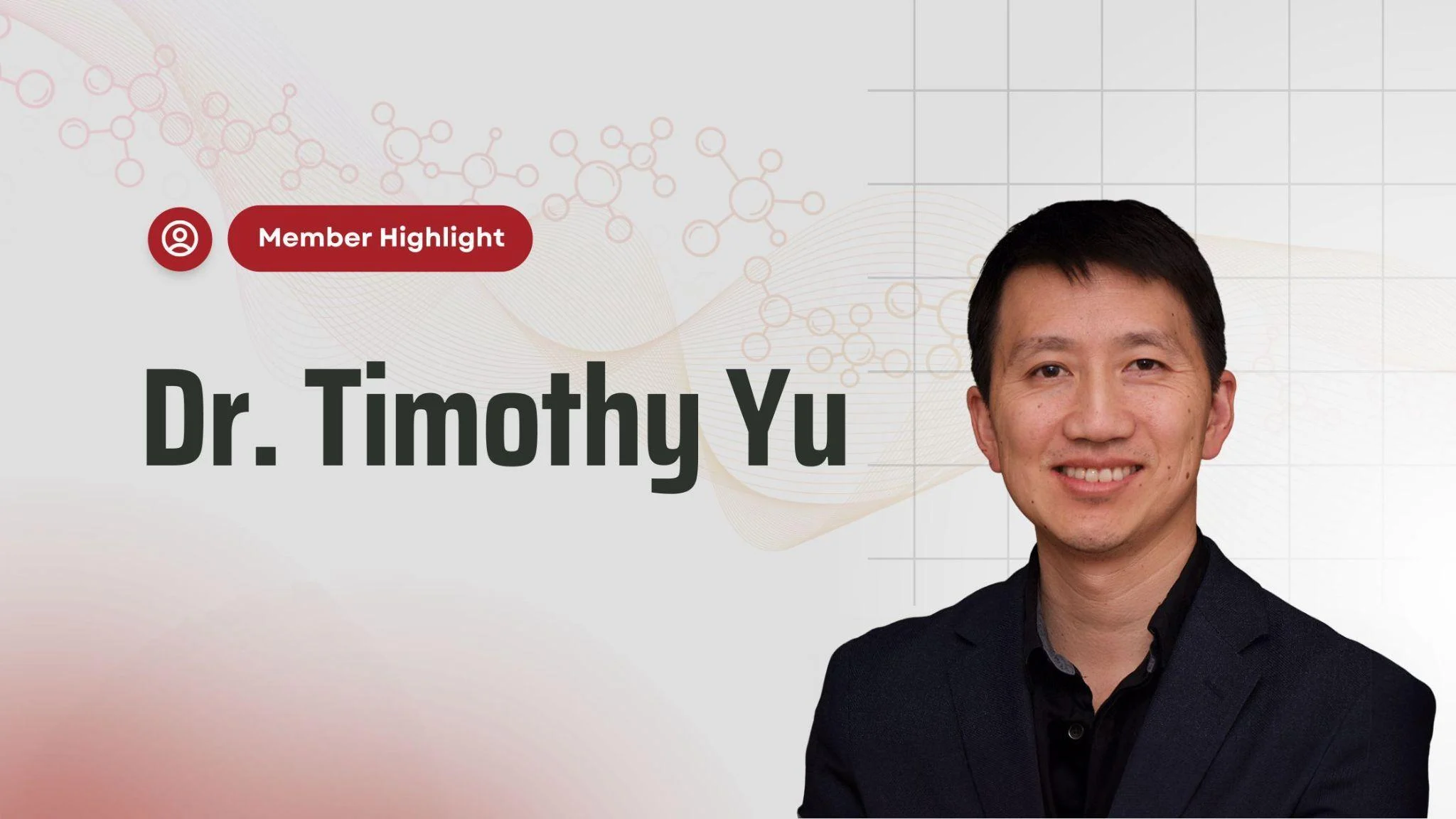
The sometimes twisty, sometimes intuitive, sometimes amazingly elegant hidden logic of the natural world has always fascinated Dr. Timothy Yu. Knowledge we now take for granted — the genetic code, machinery of transcription, or the layered biological logic of developmental patterning — were once completely mysterious. The ability to discover this hidden knowledge and apply it in the real world to help patients has inspired Dr. Yu throughout his career.
Following his north star: education and training
While Tim is now a neurogeneticist at Boston Children’s Hospital and Harvard Medical School, he grew up in San Diego, where his parents pursued careers in medical research. As a kid, he was unaware of much of their work, but when he went to his mother’s clinic at UCSD Medical Center as a teenager, he was struck by what he saw: young children with Leukemia in hospital gowns, attached to IV poles, bald from their chemotherapy. His mother, a typically cheerful pediatric hematologist and oncologist, told him that half of the kids he’d seen wouldn’t make it.
Shocked, he asked, “Isn’t that so depressing? Why in the world do you do this? Her response: “Actually, when I started 20 years ago, we lost 90% of them. So from my perspective, I’m really proud we’re able to save half.”
Tim followed in his parents’ science-shaped footsteps, studying biochemistry and molecular biology at Harvard College, and then neuroscience in graduate school at the University of California, San Francisco. Approaching the completion of his MD-PhD program, he had to decide: spend years in more medical training, or fast-track into basic science?
After a great deal of soul searching, he decided he wanted to pursue work anchored in real-world problems. Rather than choosing science for science’s sake — getting grants, giving talks, publishing important papers — he believed the truest demonstration of understanding a subject was to show you could put your knowledge to good use.
“This felt to me like a north star: seeing an idea implemented in the real world, for some useful practical purpose. For me, it translated to reaffirming my commitment to the physician-scientist route.”
That decision made, he had to choose a specialty for residency. He noticed many of his peers chose their fields based on their personalities.
“A sort of ‘Sorting Hat’ quiz — based on your personality type, and whether it matched the stereotype of what a particular medical subspecialist was supposed to be like? Friendly, good with kids? Pediatrics or family medicine for you. Like dimly lit rooms, microscopes? Radiologist or pathologist. Like to cut? Surgery for you.”
As he reflected on what to choose, he thought of his mother’s words 15 years ago, on that visit to his mother’s clinic. He decided not to choose a field based on how it looked presently, but on where it was headed, what problems needed to be solved, and where he could see the field going over the next 20 years and where, if given the opportunity, he could help take it.
Encountering antisense technology: finicky and satisfyingly mysterious
Tim did his neurology residency at Massachusetts General Hospital and Brigham and Women’s Hospital, followed by a fellowship in neurodevelopmental genetics at Massachusetts General Hospital and Boston Children’s Hospital. He began groundbreaking work in diagnostic personalized medicine, becoming one of the first to use genome-scale sequencing to identify a human disease gene in 2010 (1). In 2013, he published a key study applying exome sequencing to uncover rare genetic causes of Autism spectrum disorder, which highlighted recessive contributions (2). His research group continues to use advanced sequencing and analytics to understand the genetics of autism and other brain development disorders. These tools have also been translated to the hospital, where analyses of rapid-turnaround genomic sequencing are conducted in both the neonatal intensive care unit and the newborn nursery. However, it would be his later work with antisense technology that would change not only his research but also the field of rare diseases.
Before earning his medical degree, Tim first heard of antisense during his undergraduate years at Harvard in the early 1990s, when one of his classmates in the lab next to his was using antisense oligonucleotides to block gene expression in mammalian cell culture.
“As I remember it, the technology was simple in concept, but it seemed annoyingly finicky and mysterious,” he says.
The next time he encountered antisense technology was in graduate school a few years later, and this time he used it to identify his first disease-causing gene in a worm brain. Surfing the C. elegans genome, he had discovered a worm ortholog of an interesting neuronal cytoskeletal protein on chromosome 5, suspiciously close to unc-34, a mapped genetic locus that, when mutated, caused severe miswiring defects in the worm brain. Knocking down this gene by injecting an antisense oligonucleotide phenocopied the unc-34 phenotype, proving that it was the causative gene. But it was his encounter with the technology in 2017 that proved to be the most important, and which would reshape the direction of his research.
Building a framework for the ‘long tail’ of genetic disease
In January 2017, he came across a Facebook post connecting him to a Colorado family whose daughter had a terrible neurodegenerative disease. Their daughter, Mila, had just been diagnosed with Batten disease, a rare and cruelly progressive condition that impacts around 100 children born in the United States every year. Using their expertise in genome sequencing, Tim and his research group identified a tricky mutation that had eluded detection in Mila’s previous clinical workup; this allowed them to confirm her diagnosis and determine that her brother was not at risk for the disease.
“But we also realized that her unusual mutation could, at least in principle, be correctable with an antisense oligonucleotide,” Tim explains. “The only problem was, who could possibly develop such a drug? Her mutation was at that point — and to this day remains — unique to her — an “N=1.”
The team began speaking to everyone they could think of for advice and, in the end, decided they would have to make the therapy themselves. This would be the world’s first individualized ASO drug tailored to a single patient (3), and while Mila eventually passed away from her condition, her bespoke therapy suppressed her seizures and improved her quality of life. Tim says it was also the start of a remarkable odyssey that, over the past eight years, drew him into the OTS community, reshaped the direction of his research group, and been the source and inspiration of some of the most prized personal and professional partnerships with oligo, rare disease, CMC, and regulatory experts across academia, government, the private sector, and beyond.
“Over and over again, I’ve been struck by the generosity of our OTS community, and their willingness to help their fellow colleagues, and maximize the therapeutic potential of this field,” he says.
Tim lists the therapy they created for Mila, called milasen, as a proud achievement. Since then, he and his team have created several other personalized medicines, including atipeksen (4), for a young girl with a genetic disorder called A-T, or ataxia-telangiectasia, which causes severe neurodegeneration and shortens a person’s life span by an average of 25 years, as well as valeriasen, for a young girl named Valeria with a rare and devastating form of epilepsy (5).
“I’m also proud that two of our programs — one for A-T and one for Niemann Pick type C — led to the first patients to be treated with individualized ASOs in Europe and the UK, respectively, in collaboration with Matthis Synofzik of the University of Tubingen, and Haiyan Zhou and Paul Gissen of University College London and GOSH, respectively,” he says.
These therapies, together with programs led by Neil Shneider and Ionis, and Bob Brown and Jon Watts, set the tone for a productive Critical Path Innovation Meeting with the FDA in 2019, Tim says, which led to the release of the first regulatory draft guidelines for the development of individualized drugs in 2021.
“These have in turn cracked open the door for many, many others to apply genetically precise therapeutic technologies to orphan diseases,” he says.
Beyond the lab, Tim is immensely proud of the N=1 Collaborative, which he founded with Mila’s mother, Julia Vitarello, to advance the international effort to develop individualized therapies for rare diseases. Tim says that what started as a small OTS task force (led by Art Krieg, Annemieke Aartsma-Rus, Jon Watts, and Keith Gagnon) has now grown into a vibrant community working together to make individualized therapeutic approaches safe, affordable, and accessible.
“It’s been a privilege to work alongside such generous contributors to build a framework for the ‘long tail’ of genetic disease,” he says.
Future directions of OTS research and advice for young scientists
The creation of the N=1 therapies is a significant development in the field, and last year, the story of baby KJ and the creation of a bespoke therapy for his rare condition brought public awareness of individualized medicine up another notch, says Tim. Additionally, at the end of 2025, the FDA’s announcement of the plausible mechanism pathway (6), as well as a similar announcement by the MHRA (7), reflects a shift in regulatory readiness for individualized medicine, which Tim says is an acknowledgment that “the time is now.”
As new and more effective chemistries and delivery methods roll out, Tim says each has the potential to improve the therapeutic index and unlock the true programmable potential of oligonucleotide drugs. Additionally, Tim says AI can be an essential strategic enabler that helps guide us more efficiently towards the critical physiochemical, molecular biological, and cellular parameters required to develop safe and successful drugs.
“It will never replace experiments entirely, but will likely help us navigate sequence space more efficiently.”
As for young scientists entering the field, Tim’s advice is to work hard, talk to everyone, and cross-train wherever you can because “the most significant advances in science are usually made at the intersection of disciplines.” Additionally, he encourages scientists to embrace ideas that may feel “big, risky, and unlikely to work,” because it is their job as scientists to tackle important problems.
“We try to think problems through from first principles, to explore what’s scientifically, clinically, and ethically possible — and make it happen. But sometimes that takes us into unfamiliar territory. People pause and ask: Wait—can we really do that?” he says. “It’s natural for people to be uncomfortable. You have to think through all of the angles, be careful. Pressure test your ideas with experts. Be willing to be challenged. Then, if you’re convinced, you have to walk others through it to convince them. You have to talk to a lot of people, in their languages.”
Personal life and legacy: no disease is too rare for attention
The work is demanding, but Tim is grateful for his dedicated team, some of whom have been with him for a decade. He also finds equilibrium through his family.
“Having three kids aged 11 through 15 who are smart and sassy is a very effective way of staying grounded,” he says. Cooking, playing the piano, and, when he has the chance, hiking with the kids and using his long lens to photograph birds and wildlife are among his favorite activities outside the lab. “And sports are a fantastic centering activity for me: tennis, badminton, squash, pickleball.”
Asked what one thing he would want to be remembered for, Tim says it would be forging a path for a new field of “interventional genetics”— marrying science, drug development, and responsible medicine — for the benefit of patients, no matter how “rare” their disease. “The oligonucleotide technology that has been developed by the OTS community has an incredibly broad reach — working together, let’s maximize it.”
To stay up to date with Dr. Tim Yu’s latest research and contributions, visit his lab website here and watch the N1C seminars here.
To read the mentioned research articles, see the list below:
- Yu TW, Mochida GH, Tischfield DJ, Sgaier SK, Flores-Sarnat L, Sergi CM, Topçu M, McDonald MT, Barry BJ, Felie JM, Sunu C, Dobyns WB, Folkerth RD, Barkovich AJ, Walsh CA. Mutations in WDR62, encoding a centrosome-associated protein, cause microcephaly with simplified gyri and abnormal cortical architecture. Nat Genet. 2010 Nov;42(11):1015-20. doi: 10.1038/ng.683. Epub 2010 Oct 3. PMID: 20890278; PMCID: PMC2969850.
- Yu TW, Chahrour MH, Coulter ME, Jiralerspong S, Okamura-Ikeda K, Ataman B, Schmitz-Abe K, Harmin DA, Adli M, Malik AN, D’Gama AM, Lim ET, Sanders SJ, Mochida GH, Partlow JN, Sunu CM, Felie JM, Rodriguez J, Nasir RH, Ware J, Joseph RM, Hill RS, Kwan BY, Al-Saffar M, Mukaddes NM, Hashmi A, Balkhy S, Gascon GG, Hisama FM, LeClair E, Poduri A, Oner O, Al-Saad S, Al-Awadi SA, Bastaki L, Ben-Omran T, Teebi AS, Al-Gazali L, Eapen V, Stevens CR, Rappaport L, Gabriel SB, Markianos K, State MW, Greenberg ME, Taniguchi H, Braverman NE, Morrow EM, Walsh CA. Using whole-exome sequencing to identify inherited causes of autism. Neuron. 2013 Jan 23;77(2):259-73. doi: 10.1016/j.neuron.2012.11.002. PMID: 23352163; PMCID: PMC3694430.
- Kim J, Hu C, Moufawad El Achkar C, Black LE, Douville J, Larson A, Pendergast MK, Goldkind SF, Lee EA, Kuniholm A, Soucy A, Vaze J, Belur NR, Fredriksen K, Stojkovska I, Tsytsykova A, Armant M, DiDonato RL, Choi J, Cornelissen L, Pereira LM, Augustine EF, Genetti CA, Dies K, Barton B, Williams L, Goodlett BD, Riley BL, Pasternak A, Berry ER, Pflock KA, Chu S, Reed C, Tyndall K, Agrawal PB, Beggs AH, Grant PE, Urion DK, Snyder RO, Waisbren SE, Poduri A, Park PJ, Patterson A, Biffi A, Mazzulli JR, Bodamer O, Berde CB, Yu TW. Patient-Customized Oligonucleotide Therapy for a Rare Genetic Disease. N Engl J Med. 2019 Oct 24;381(17):1644-1652. doi: 10.1056/NEJMoa1813279. Epub 2019 Oct 9. PMID: 31597037; PMCID: PMC6961983.
- Kim J, Woo S, de Gusmao CM, Zhao B, Chin DH, DiDonato RL, Nguyen MA, Nakayama T, Hu CA, Soucy A, Kuniholm A, Thornton JK, Riccardi O, Friedman DA, El Achkar CM, Dash Z, Cornelissen L, Donado C, Faour KNW, Bush LW, Suslovitch V, Lentucci C, Park PJ, Lee EA, Patterson A, Philippakis AA, Margus B, Berde CB, Yu TW. A framework for individualized splice-switching oligonucleotide therapy. Nature. 2023 Jul;619(7971):828-836. doi: 10.1038/s41586-023-06277-0. Epub 2023 Jul 12. PMID: 37438524; PMCID: PMC10371869.
- Nakayama, T., El Achkar, C.M., Burbano, L.E. et al. Antisense oligonucleotide-mediated knockdown therapy in two infants with severe KCNT1 epileptic encephalopathy. Nat Med (2026). https://doi.org/10.1038/s41591-026-04314-9
- Prasad V, Makary MA. FDA’s New Plausible Mechanism Pathway. N Engl J Med. 2025 Dec 11;393(23):2365-2367. doi: 10.1056/NEJMsb2512695. Epub 2025 Nov 12. PMID: 41223362.
- Cheerie D, Meserve MM, Beijer D, Kaiwar C, Newton L, Taylor Tavares AL, Verran AS, Sherrill E, Leonard S, Sanders SJ, Blake E, Elkhateeb N, Gandhi A, Liang NSY, Morgan JT, Verwillow A, Verheijen J, Giles A, Williams S, Chopra M, Croft L, Dafsari HS, Davidson AE, Friedman J, Gregor A, Haque B, Lechner R, Montgomery KA, Ryten M, Schober E, Siegel G, Sullivan PJ, Whittle EF, Zardetto B, Yu TW, Synofzik M, Aartsma-Rus A, Costain G, Lauffer MC; N=1 Collaborative. Consensus guidelines for assessing eligibility of pathogenic DNA variants for antisense oligonucleotide treatments. Am J Hum Genet. 2025 May 1;112(5):975-983. doi: 10.1016/j.ajhg.2025.02.017. Epub 2025 Mar 25. PMID: 40139194; PMCID: PMC12120168.
Additional Links: