
Looking for something?
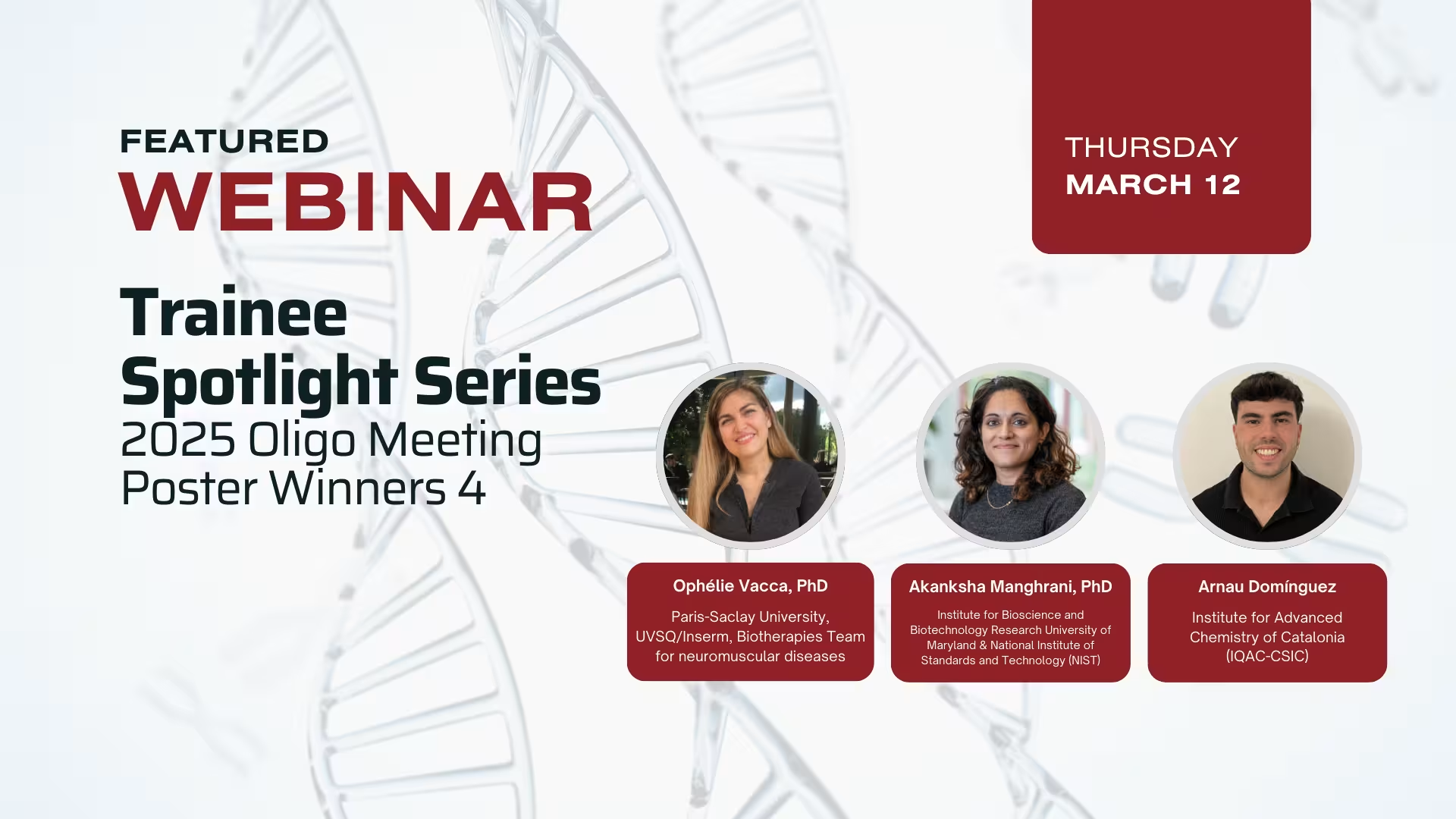
Date: March 12, 2026
Time: 12-1pm EDT / 5-6pm CET
Title: Neonatal Delivery of Exon Skipping Therapeutics Maximizes Brain Dystrophin Rescue in the Mdx52 Mouse Model of DMD
Description:
In this webinar, I will explore how early-life exon-skipping strategies can be leveraged to target the brain in Duchenne muscular dystrophy. Using the mdx52 mouse model, we investigated different therapeutic tools and delivery routes to understand how timing shapes CNS engagement. This talk will highlight why the neonatal window may offer unique opportunities for enhancing brain-targeted therapies and improving future neurocognitive outcomes.
Speakers:
Title: The Impact of Phosphorothioate Chirality on ASO Structural Landscape and RNase H Interaction: A Molecular Dynamics Perspective
Description:
Phosphorothioates (PS) are widely used in antisense oligonucleotides (ASOs), yet how PS chirality shapes ASO structure and function remains unclear. In this talk, I will show how modXNA—a new molecular dynamics (MD) program for generating simulation parameters for over 100,000 modifications—reveals stereochemistry-dependent structural differences and enables modeling of stereo-pure ASO interactions with RNase H. Together, these results demonstrate that MD simulations with modXNA offer a cost-effective, high-throughput approach for predicting how chemical modifications influence oligonucleotide structure, dynamics and therapeutic properties. These findings lay the groundwork for using MD simulations to rapidly screen novel chemical modifications and accelerate ASO drug development.
Speaker:

Title: Towards Understanding the Role of C2’-Fluorine Substitutions in Parallel Triple Helix Structures
Description:
The study of nucleic acid triple helices is of great interest due to their role in various cellular processes and their applications in therapeutics, gene editing, and nanotechnology. Using a combination of NMR and biophysical techniques, we reported the high-resolution structure of C2’-fluorinated parallel triplexes, paving the way for the rational design of future modifications and potent antigene therapies. Our work provides a unique opportunity to investigate the folding/unfolding of these structures using 19F NMR spectroscopy, highlighting the potential of this approach to study triplex formation in vitro and potentially in cell.