

FDA’s Plausible Mechanism Pathway for Personalized Therapies to Treat Rare Diseases
The clock was ticking as soon as baby KJ was born in the summer of 2024. Within two days of his birth, he was lethargic and struggled to breathe. His blood test results showed elevated ammonia levels, leading to a diagnosis of carbamoyl-phosphate synthetase ...

Immunogenicity Risk Assessment for Nucleic Acid Therapeutics
Date: October 1, 2026 Time: 11-12pm EDT / 5-6pm CEST Title: Immunogenicity Risk Assessment for Nucleic Acid Therapeutics: A Comprehensive Evaluation for ASO, siRNA, and Nonvaccine mRNA/LNP Therapies Description: Nucleic acid therapeutics require new immunogenicity evaluation frameworks, as the safety and ...

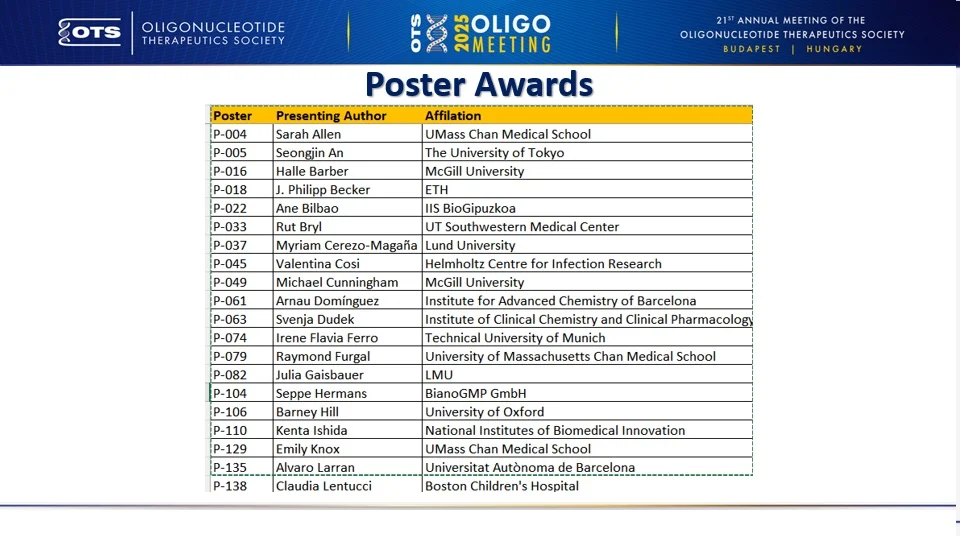
Trainee Spotlight Series: 2025 Oligo Meeting Poster Winners 6
Date: September 17, 2026 Time: 11-12pm EDT / 5-6pm CEST Title: Streamlining Exon-Skipping Antisense Oligonucleotide Therapy Development Via a High-Throughput Approach Description: Disease-modifying therapies are available for <5% of the >7000 described rare genetic diseases (RGDs). Antisense oligonucleotides (ASOs) represent a ...
Zilganersen Trial Shows Slowed Disease Progression and Improvement in Gait Speed
Hailey was born a healthy baby, her mom says, hitting all her infant milestones like rolling over and sitting up. But at nine months old, she began falling over when she sat up and having constipation and little sleep. Her concerned mom brought it ...

Advancing Precision Medicine: Oligonucleotide Therapeutics and Genome Editing
Date: June 18, 2026 Time: 11-12pm EDT / 5-6pm CEST Title: Advancing Precision Medicine: Oligonucleotide Therapeutics and Genome Editing Description: The advent of programmable therapeutics — from oligonucleotide drugs to genome editing technologies — is transforming the treatment landscape for genetic ...
Targeting APOC3: Redemplo Joins the Growing Landscape of Treatment for FCS
When Julie was just 18, her blood results revealed alarmingly high triglyceride levels at over 1,000 mg/dL. Two years later, she had her first acute pancreatitis attack. Although she would suffer from monthly pancreatitis flares after having her son and her triglycerides would escalate ...

TfR1-Targeted Bicyclic Peptide-Oligonucleotide Conjugates for Improved Potency and Enhanced Muscle Delivery
Antisense oligonucleotides (ASOs) and small interfering RNAs (siRNAs) are uniquely suited to address single-gene diseases affecting skeletal and cardiac muscles. While distributed broadly, they are more likely to accumulate in the liver and kidneys than muscles, thus limiting their treatment applicability. Additionally, the anticipated ...

Chance, Choice, and Conviction: A Career in Oligonucleotide Therapeutics
Date: June 4, 2026 Time: 11am-12pm EDT / 5-6pm CEST Title: Chance, Choice, and Conviction: A Career in Oligonucleotide Therapeutics Description: An insight into how a combination of (taking) chance, role models, mentors, becoming better at making informed decisions, and learning ...
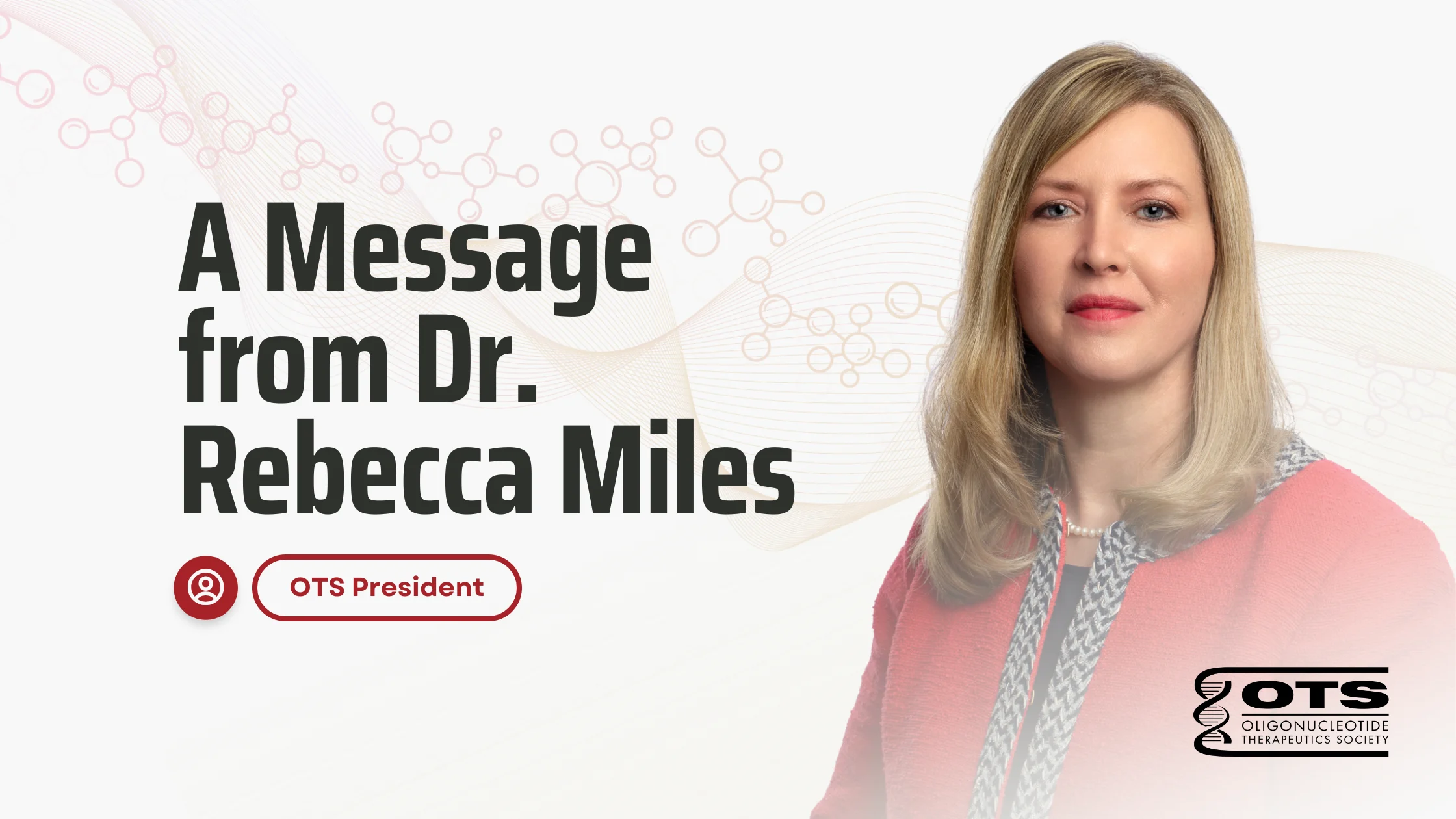
A Message from Dr. Rebecca Miles
As we begin 2026, I am honored to welcome you to a new year and a new chapter for the Oligonucleotide Therapeutics Society. The start of the year is a natural moment for reflection on how far our field has come, and on the ...

